Musings, Uncategorized

Crescent Moon

I am a crescent moon kind of girl. I love a crescent moon and I think it loves me back, it seems to be winking slyly at me from above.

People celebrate the full moon and call it by so many names, harvest moon, strawberry moon, blue moon. For me, the full moon is too pregnant with expectation. Bring this project to a close, tie up that loose end, get on with it already. The full moon makes me feel heavy, it is no wonder it makes some creatures howl at it and roam the dark countryside.

The new moon does me little good, hanging amongst the stars like a deflated basketball. It needs new ideas, beginnings and plans to pump it up. It brings pressure and promise and comes in empty-handed.

But ah, the crescent moon lingers in the balance between the two, neither here nor there with never a care. It slices the heavens like a sweet sliver of cake. It waxes or wanes between creation and completion, occupies the same space where I spend much of my time. Head in the clouds, biding our time. It asks nothing and takes nothing and together, we are suspended in the blissful peace of a thing half done.

A gibbous moon is nice, its belly full from a meal mostly eaten, the gaping line of its mouth swallowing the last remaining shadow. It is the friend who stays a bit too long, in an awkward silence that presses me to clear my throat and move things along. Almost time to put things to bed again as the full moon wraps an arm over his shoulder, telling him “step aside, it’s my time to shine”.

Uncategorized

Magnifica

Chapter One: The Long Walk

Enzo Oliveri walked with deliberation, despite a leg twisted from an accident in his youth, and the weight of his possessions slung on his back. The mare walked carefully by his side, her rhythmic steps in concert with his jagged gait, offering him the support of her muscled shoulder from time to time. They had walked this way together for days across a broken landscape, rarely meeting another person or meeting them in groups of a dozen or more, pushing carts or pulling bags along behind them. Wanderers like him moving from place to place, many with no clear idea of where the road ahead led them. And though his own direction was unclear, he knew his goal with certainly, to lead Magnifica to safety. So they continued on, stopping only to allow her time to graze when the shoulder yielded enough green grass or to lead her to water. Enzo took his cue from her when she needed to rest or drink. Knowing that a horse would turn away from tainted water, he filled his own cantenna and drank only when she did. While she grazed or stood quietly napping with her head lowered and one hindleg cocked, he admired her fine bone and refined head, the wave of her black mane and her strong back. Sometimes he knelt beside her and prayed for their safety. In the dark of night, they walked if the road was lit by the moon or moved off the road into thicket or trees to sleep. He waited while she rolled and settled herself, then curled his crooked body against her body and slept with his head against her shoulder, rocked by the rising and falling of her massive ribcage. Day after day they traveled this way together. He lost track of time and then would find himself again according to the bells of a church or the sounds of vespers, or the trail of people moving toward a synagogue. But it seemed to him that it had been a very long time indeed since the deep tonging swell of a bell had reached his ears, even longer since he had heard a voice raised in prayer other than his own.

On one of these timeless wandering days, he couldn’t have said which, they came upon a young boy, standing squarely in the road, staring at some far-off place down the rutted road ahead. Enzo called out to the boy who turned startled and quickly made to move off. When he saw the bent man with his heavy pack and more so, the weary horse beside him, he skidded to a halt. They tried greeting one another, but neither knew the other’s language and so they gradually fell into step with one another silently. The boy was tired and didn’t mind the odd fashion that the old man walked and he was lulled by the steady clip-clop of the bare-footed mare. For days they continued this way, happy for each other’s company. They fed off food they found in the packs and wagons they found along the way, whose owners either lay dead in the streets beside them or had fled and abandoned possessions when marauders came upon them savagely. They rarely saw the enemy themselves and only occasionally were affronted by people they met. Perhaps they saw the crippled old man and felt sympathy or the fact that he traveled with a young boy who was pale and gaunt caused them to look away. Enzo often worried that someone would try to steal the mare from him, for transport or for food. He kept her covered in dirt and dust, and though her belly and back were protected by a layer of fat and muscle, he would lick his thumb and trace lines along her ribs in the dirt on her coat to make her look thin. To look at her as a stranger, she was unremarkable. Enzo liked it that way and encouraged her to carry her head lowered, take lumbering steps, and allowed her mane to be unkempt, hiding her neck and face. In fact, she was magnificent, as her name implied. Her legs were refined and her back coupled smoothly into strong flanks and hindquarter. She had large eyes and a wide brow and nostrils that tapered to soft lips. She was bred well and could move like the wind when called for. She was no more than five years, though Enzo feared that she no longer carried the foal that had been growing inside her when they first took to the road in his war-torn land. The entire landscape was ravaged by wars now, every country he could name was under siege, its people one moving mass of humanity, headed to some unknown place of peace. His only direction was ahead and if the road turned, so did he. He only knew to keep moving, to keep seeking, and to keep a close eye on the horse. If she showed signs of fretting, they hid quickly. When she raised her head and sniffed the wind, he looked around and then hurried both into the bushes and hid his pack. When she was restful, he breathed easier. He thought how lucky he was to have her with him, how clever she was and how well she protected them. They were never set up by surprise and it was not uncommon for them to watch from behind branches as small groups of soldiers or bandits passed by without a glance in their direction.

The wagons grew fewer and fewer and food was harder to come by. Water was everywhere and when they found clean water, they drank until their bellies felt full for it. They tried the grass and weeds that the mare sustained herself on. On rare occasions, Enzo would dig deep into his pack and pull out a tin of tea leaves and warm water over a tiny fire of leaves and twigs. He never let the fire run long, afraid it would be seen but also afraid of taking too much comfort from it and lingering in one place too long. But tea served not only as a meal but as medicine. The boy wrinkled his nose at its bitterness but drank it deeply and with gratitude. They shared only a few words…tea, rest, and her name. Enzo called her Magi, the boy called her Maggie.

As the days passed, the boy grew weaker. He was still growing and the bits of food they could find or scavenge from the land were not enough for his body. It was surprising to see the old man grow in his vigor while the younger grew less so. Enzo took great strength in his mission and it fueled him. The boy had no idea of passions or desires and only knew survival. At times, it seemed even that was of little interest to him. They walked as the sun grew high in the sky, the dust from the road stirred beneath their feet and irritated their eyes. The mare occasionally blew a great gust of air from her nostrils to clear them and her eyes were half-mast behind long lashes. Enzo held her rope in one hand and the boys in his other. Both felt thin and frail. He was deep in thought about what he should do, where they were even headed and when they would know they had arrived. He had no specific destination, barely a sense of where he was and certainly no plan that included a young child. Thankfully, he thought, it was a male child and not a young girl. Suddenly, the boy fell, jerking Enzo’s arm roughly and bringing him out of his contemplation. The boy stood with difficulty and slowly began to let out a wail, barely audible at first and rising to a dangerous pitch. Enzo saw the skin below the shorts the boy wore start to pimple up with tiny beads of blood where the dirt road had skinned it. He had no clean water with which to cleanse it and no wraps to bind the roughened skin. Had he, he would have chosen not to anyway, lest he trap an infection that would run out of control. Instead, he knelt beside the boy and used the clean inside of the cuff of his blouse to wipe a streak from his cheek. He took the boy’s face in his hands in the first gesture of affection that had passed between them and looked into crystal blue eyes damp with tears. You will be all right, he told the boy and though he knew he could not understand the words, he felt he was heard. And with that, he reached under the boys arms and lifted him up off the ground. He cooed to the mare and he laid the boy across her shoulder and with his other arm, deftly swung his back leg over her haunch. The boy had little time to be startled before he was settled on her back and looking down into Enzo’s face. The mare stood perfectly still though her ears flicked back and forth and her eye was trained on Enzo for assurance. He kept one hand on her neck and one hand on the boy’s thigh and eased her forward a step. The boy lurched and a timid yelp burst from his lips. Enzo took a length of the mare’s mane and tied it into a loop that he then handed to the boy and motioned him to hold. “Faeries stirrup” he said aloud to nobody in particular. Enzo had tried hard not to think about where he had left, to not see in his mind the cobblestone courtyard of the stud farm where he had grown from a boy to a stable hand to head groom under his father’s direction and the tutelage of the couple that owned the farm. But as he saw the boy curl his fingers around the mane, he remembered his own father doing the same and explaining to him that the tangles they found in the manes of the horse’s each morning as they came in from the field for their oats and apples were fashioned by faeries who rode them about the field in the night. As he allowed himself to get lost for a moment in the memory of his father’s face, the boy was forming his own memory. Never before had he viewed the world from such a position, to look through the ears of the mare at the world as she saw it. To feel her shoulders rise and fall under his knees and her hind feet coming solidly under her body to strike the ground. Magi felt the keen responsibility that had now been bestowed upon her. She had only had someone on her back a few times in her young years and none of them of recent. She gathered herself and despite her misgiving, carried herself as if she had been a riding horse all of her days. She felt the shifting wait of the little man aboard her and angled her body underneath him as she walked, cradling him as only a horse can.

Enzo meanwhile was struggling to keep the pleasant memory of his own boyhood from mixing with the images of his last hours at the farm. He had seen the soldiers driving toward the farm from the back of the horse he was riding that day, he was in the high field and knew he would have to gallop to reach the farm ahead of them. Even as he careened into the courtyard, the staff were running toward the stables frantically to throw open the stall doors before they desended. The gunfire started almost instantly and Enzo felt the horse whose reins he still held sink to the ground. He fled through the barn, stopping only for a moment in the tackroom to grab several files from a tall cabinet. He rifled through them for a moment and selected ten. Then he dashed out a side door from a washstall and ran in the direction of the mare’s field. Magnifica was there at the gate, whirling in panic and stomping the ground. It took him a moment to quiet her and lash a lead line around her neck. He led her as quickly as he could uphill into the trees so to be unseen. It was the long way around to a foaling shed that was located at the back of the pasture, near the skeleton of an old barn that had been the original stallion barn. There he tucked her away in a stall and threw hay down from the loft above to keep her occupied. And prayed she would not call out to the other horses. He stashed the files in the loft as well, under some old horse blankets and hay. Then he went to hayloft window and dared to look outside. The soldiers were standing about in the courtyard, there were two bodies on the ground, one human and one equine. From his viewpoint, he could not determine the one but he knew the other to be the horse he had rode in from the field on, a faithful and gentle old stallion long past his breeding years. Shots echoed from within the barn and a group of soldiers separated from the rest and headed toward the pasture. Enzo did the only thing he could think to do and hid. Only hours later did he emerge and sneak down to check on the mare. She lay on her sternum, nose in the hay, eyes closed. He watched her breath for a few minutes while he thought about what to do next. When he was confident that the silence outside could only mean that the soldiers had moved on, he went back to the loft and sought out the files. Gazing across the farmland from the hayloft, his heart sunk. Mares with their bellies slit end to end littered the pasture. There came no sound or movement from the great brick barn. His steps were heavy as he walked back to his apartment at the end of the barn aisle and gathered the few things he would need for the road. He buried the files in a pocket at the back of a knapsack along with a few clothes, a tin of tea, his best flensing knife and then headed for the feedroom. There he found his employers, draped across one another in death. With a few bandages, some medicine and what money he could find, he headed back to retrieve Magnifica. Ten stallions, each in their own stalls, laid dead. The foundation sires for the breed, gone forever. Enzo could not bear to look into the last stall, where the stupendous Greco was kept. Enzo had been at his birth, been the first to sit astride him, had shown Greco in the grand salons before the accident that left him with a leg that refused to straighten properly. He couldn’t bear to see his fate and could not leave without knowing if he could be saved. The stallion’s eyes stared skyward, cold and empty. Enzo’s hand went to his mouth and his heart locked in rage. He stumbled back to the pasture shed, past the mares who would never bear their fruit. He slumped onto the ground next to Magnifica and wept into her neck. And he prayed that the spirit of Greco was alive in her belly.

Uncategorized

UnHinged

It’s morning.  I lie meditating, gently scanning from foot to head, ears tuned to a lilting voice of a Buddhist nun coming through my earbuds, urging me to follow my breath into my body and out again.  I begin in resistance, as usual, the hands curled, the arches of my feet knotted, the ricocheting sound of my mind glancing off the walls of my skull.  Breathe.  The simplest of tasks.  The activity that governs and rules itself all day, every day. The mother of my body, quietly toiling and sustaining me with a hum on her lips and never a plea for notice. The maternal rhythm that catches me when I am scared, gallops alongside me in play and slowly rocks me in sleep.  But as I try to channel it, to control it, to not just abide in it but to guide it, the breath rises up to wrestle with me, pushes back and complains as I try to hold her still.  She becomes the teenage sister, wrestling with me and chiding me, coaxing me to cry uncle and give her control.  She loves me as much as the mother but in the taxing way that pushes me beyond myself, makes me look at my flaws, tosses my own emotions at me like a hat or toy quickly snatched and invites me to catch…catch…

Catch the breath.  Breath in, Breath out.  Back in the present moment.  My body prone, legs and arms outstretched on the warm mat like a lizard stretched out on a rock, basking in the sunshine of my breath. Spine elongating, bones gently oscillating, joint capsules floating like jellyfish in synovial tidepools.  My tendons are like ropes tied to a dock, allowing my muscles to drift to and fro on the waves of blood and lymph, the saline ocean of my body.  I feel myself regenerating gradually with each measured breath, the cast-off remnant of worry wriggling away from me like a severed tail.

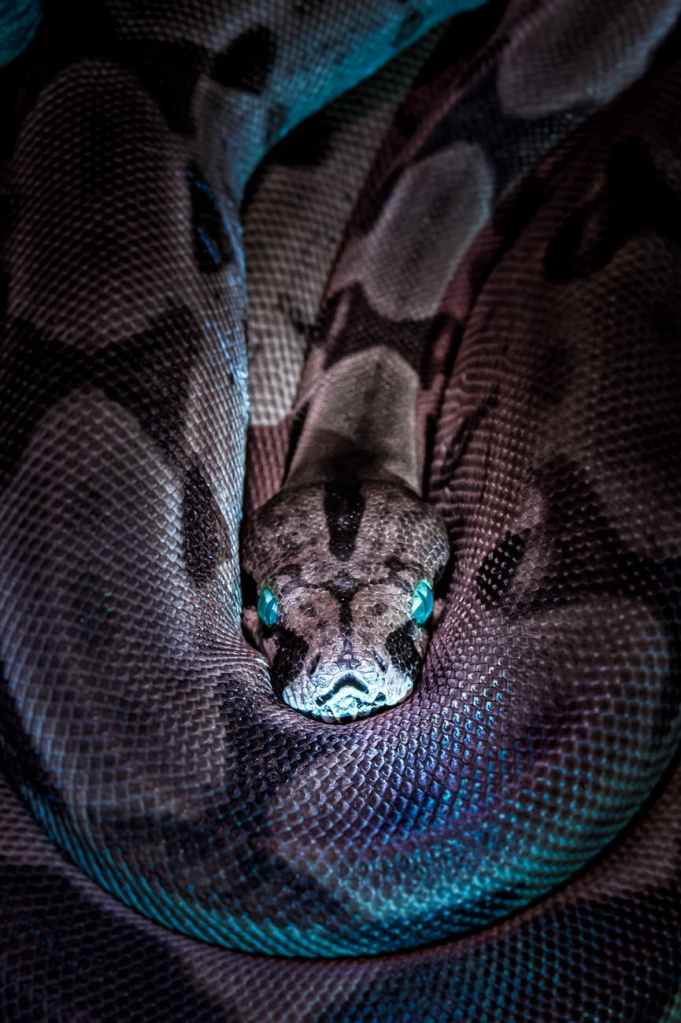
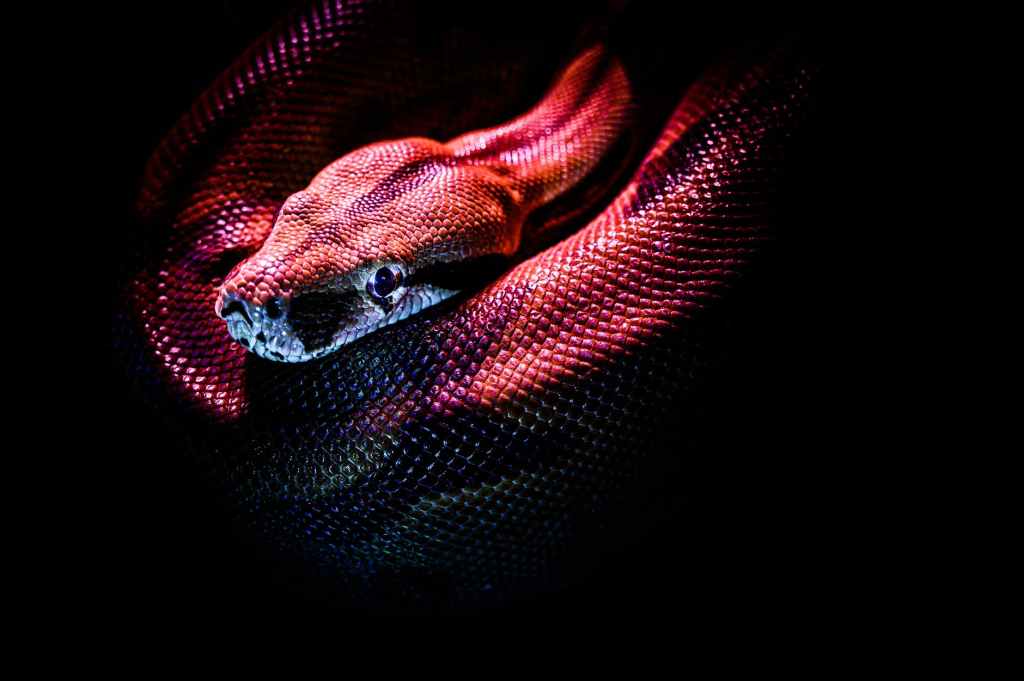
The body’s slow unfurling begins. The right hand relaxes, opens the fingers to receive.  The left hand still clenched, like a snake with a mouse in its maw, allowing me to scrabble and squirm with no promise of freedom.  I roll the shoulder blades down and back, feel the spine gasp in relief.  My scapula scrape against my ribs, tethered to a brittle sternum that yearns to crack open like a dried branch.  I think of my dog, how she lies on her back with her front legs bent midair, seemingly at rest and in motion at the same instant.  Her little scapula rest on their edge oriented as they are, running north and south alongside her ribcage, unable to spill across the floor as mine, pinned easty-westy across my back. I envy the freedom of her ribs and chest in the moments when I watch as she careens around the yard, her heart and lungs bouncing in the inflated house of her ribcage, forward, backward, side to side.  At this instant, on my mat in practice, my own ribcage feels more like an iron maiden, squeezing my heart and lungs like a boa constrictor.  Tara’s voice comes from some distant place and gently invites me to open my chest, set free my heart with my breath.  Instead, my inhale swoops into my lungs like wind throwing open a doorway.  My ribs rise in protest, a small cyclone of air forming deep in the chest and rising into a muffled cough.  The metal cage door around my heart rattles against years of internal rust and a childish sad difficulty with forgiveness.  My true heart presses against the bars like a dog in the pound, leaping against them in a tug of war with my own will.  I exhale, the left hand jerks once, twice and then falls open, soft and receiving.  In its wounded palm lies a crooked scar, a spiritual key, glistening in white promise.  Deep in my state, I test the key, crafted through fire, in the lock on my heart.  The rasp of metal on metal causes my heart to jump to its feet and run to the bars, the flush of blood through my body begins to warm and melt the hinges of my joints.  Pelvic bones melting over the rolled towel beneath them, hips gliding gently into the back of their sockets, the spine pooling across the floor as the body gently becomes unhinged, like the jaws of a giant snake.

“Unlike a mammalian jaw that is built for brute force, a snake’s is rigged with tendons, muscles, and ligaments that give the jaw a gymnast’s flexibility…The two lower jaws move independently of one another… The quadrate bone is not rigidly attached to the skull, but articulates with the skull at one end and is therefore freely moving…”The two mandibles are not joined at the front by a rigid symphysis, as ours are, but by an elastic ligament that allows them to spread apart,”…Flaunting proper table manners, a snake takes its time muscling food down its throat, walking its skull over dinner…”1

The image delights my sedated mind and I regress to a moment in time when I worked closely with the menagerie of reptiles at a Florida zoo that doubled as an amusement park.  Young and limber myself then, I walked through the park grounds on certain days with a 16-foot reticulated python encircling my body like a corset, its diamond head resting in the palm of my outstretched hand, inviting park guests to come forward to stroke its smooth cool scales, daring them to float their hand beneath his mouth to feel the flick of his forked tongue.  I would find a sunny spot beneath a palm tree to stand, talking for long stretches of time about the nature of the snake, the devastation of the rainforest they called home, their habits and diets to anyone curious enough to listen and not desperate to hurry off to the long line at the log ride or to make the noon showing at the primate pavilion. This is how I spent my days as a conservation education specialist, a glorified name for those of us fresh out of college who divided time between cleaning the various animal’s night pens, herding children and livestock around the petting zoo and taking animals out for educational talks.  I hungrily learned as much as I could about every animal in our education department collection, passing test after test to be granted permission to work with different animals in educational settings; Trixy the toucan who incessantly bit my arms with her clacking beak until I yielded up one tasty grape after another, a yellow-eyed douroucouli aptly named Luna squinting against the Florida sun until I could make it to our shaded location near the park’s synthetic waterfall outside Nocturnal Mountain.  On the best days, my schedule placed me by the elephant exhibit where the cows would lumber up, calves in tow, so the keepers could bath and scrub them with long-handled rough brooms.  While the calves fondled the water hose with their trunks, I talked to a gathering crowd about the evils of ivory and handed around precious tail hairs and toenail clippings for the children to feel.

Pulled back to the present, the mixed feelings of my time working in this captive community rise to press against my diaphragm, the lubricated hinges of my ribs pressing outward like the boards of a wine barrel against metal bands, slowly releasing the air stewing within.

And yet, the memory of standing transfixed, the Florida sun warm on my shoulders, feeling the muscles of my reptilian companion relax around me and slide from my ribs down to my waist, his head heavy in my hand, his fixed gaze shadowed by a lazy nictitating membrane and the sun playing patterns like oil slicks across his herringbone scales is one I hold without guilt or shame.  Forgiveness begins this way.

Unhinged.  A term of madness, of reckless abandon. A term that makes a person think of lunacy, of unmasked anger and manic laughter.  Unhinged, whispered from behind hands held below raised eyebrows.  Unhinged, persons in rooms struggling to hold their clarity of mind like so many helium balloons. I had an uncle, now passed.  He lived in a home, his moods passing between peaceful contemplation and rage. An injury suffered as a toddler that left him uncommunicative and untethered.  He had mastered time though. He could fix watches and clocks.  He knew the time without reference, a savant of hours and minutes.  I remember sitting at his feet when he would come home to my nona’s cottage for holidays, his enormous hand resting gently on my head, a smile as beautiful as an infant’s creasing his square jaw. He reminded me of the gentle giant from the Grimm’s fairy tale.  I imagined him sitting in a room in a home, his mind busily traveling in time as his body stood watch, just as I imagine my own lungs reclining in the room of my ribcage while I travel between the inhale and the exhale.

But why, why is it thus?  Unhinged to me seems unique and special, like a talent or a gift to unwrap, to loosen the bonds. Unhinged could be, should be seen as flexible, adaptable.  To unhinge ourselves is to redesign our thoughts and feelings to a changing world and allow it into a bigger, more generous space.  I sit or lay in meditation to unhinge the accumulation of a day’s toils so my chakras spin freely, scattering energy like broadcasting seeds in fertile soil.

Hinged, perhaps, is the term we should find fault with.  Hinged closed like a sepulcher.  Hinged to the point of minimalism, unmoveable.  A hinged mind seems small, an unhinged mind expansive.  A hinged body stands taut and rigid, unhinged joints able to dance and frolic.  I start my meditation with a hinged heart that feels caged but my unhinged heart now races toward the new day, arms flung open.

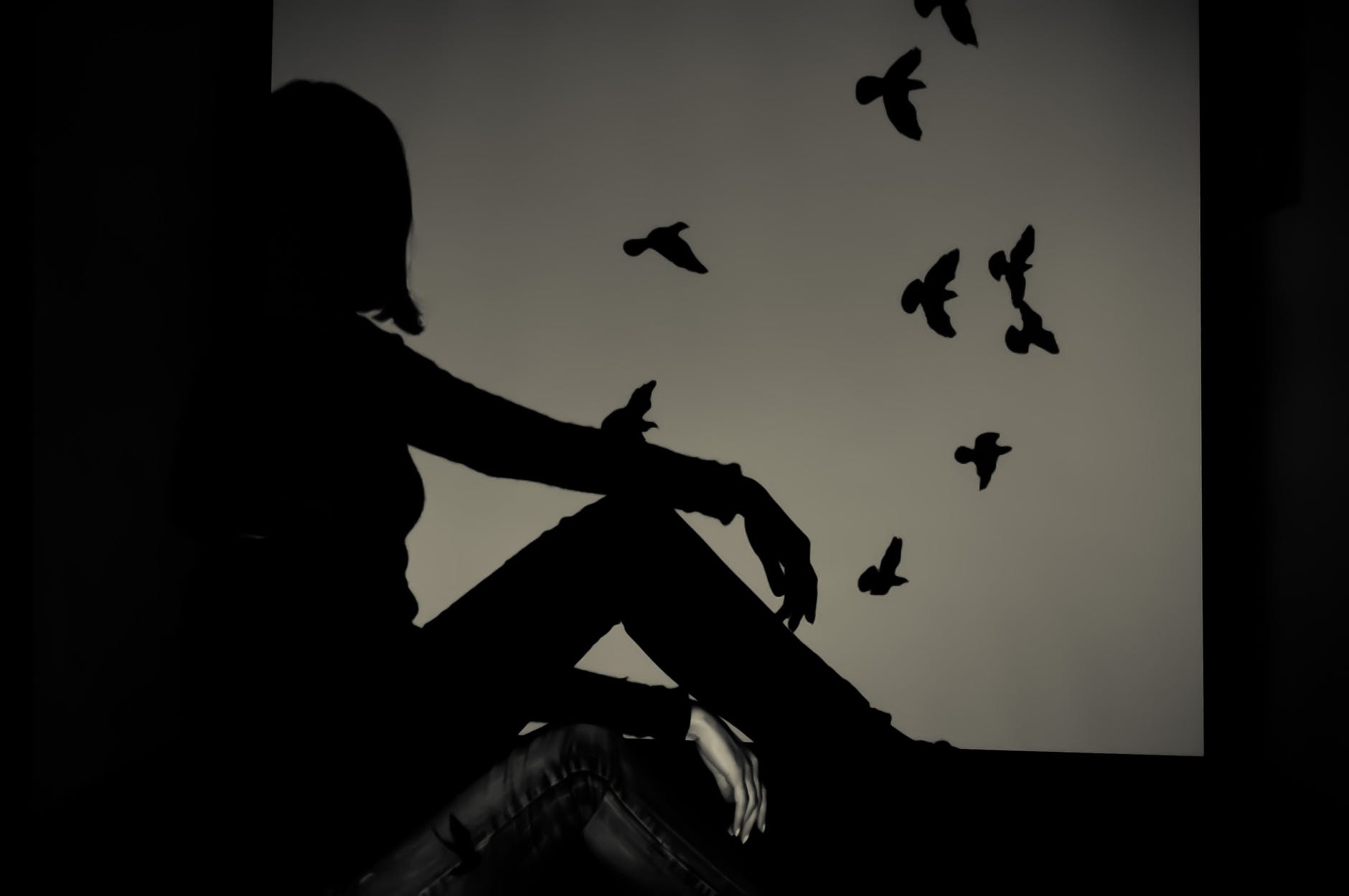
Meditation takes an inward gaze, observation takes an outward one, evolution a steady one. The snake, despite all its distinction, has yet to rise up from its home on the ground, it remains bound to earth, even its gaze cannot travel to the clear sky above it despite its perfect form.  But other reptiles did take to the sky, sprouted feathers and talons and reached to the clouds above.  Birds floating, flapping, riding the thermals in ever-widening lazy circles.  My snake body sinks into the floor while my bird heart takes off in flight.  Which is hinged and which is unhinged?

silhouette of woman sitting on window watching birds flying
Photo by Artem Mizyuk on Pexels.com
  1. https://www.livescience.com/32096-how-do-snakes-swallow-large-animals.html
Uncategorized

Father and Time

While my father was not the one to teach me about horses, he was the one to teach me about flying and daring and all the things that horses would eventually bring into my life. He was the one who swung me gently by the arms, his enormous hands under my armpits and threw me to the sky, only to catch me on the way down and rub his rough chin across my cheeks, grinning as I shrieked in glee and my mother fretted.  He was also the one who tugged at my feet as I sat on the deck of our pool, coaxing me into the water.  Towing me, tiny hands wrapped in his, around the edge, away from the edge, out into the center, the water stretching away below me, my fingers digging into the flesh on the back of his hands, tiny feet kicking wildly at the slick surface.  He was the one who whistled or hummed a song softly from behind a long, waxed mustache before letting go…watch me sink, gasp for air and then scoop me up onto his broad shoulder before the water swallowed me.  In time he would convince me to jump from the deck into his outstretched arms…first crouching, inching to the edge, one, two…we would recite together…filling my lungs and pinching my nose between wrinkled fingers before I lept, eyes squeezed shut.  He taught me to jump logs and climb fences, to climb up into the branches of our pear tree, swatting at bees gathering around the sickly sweet rotting fruit and hang from the boughs of the apple tree.  He sat with me in the driveway, his gray trousers pulled up at the knee, exposing short socks in leather loafers, and helped me remove the screws that secured the training wheels to my red bike.  We wheeled it down between us to the sidewalk and he held the back tire while I straddled the seat, tongue wedged into the corner of my mouth in concentration.  One, two…we recited together before he gently pushed the seat, jogging a step or two alongside and then watching me slip away, one cement square, two cement squares, three cement squares.

On certain summer nights, my father would roust me and my sister from the bed we shared across the hall from my parents, holding our hands and guiding us out into the night.  We would sit on either side of him under the canopy of the garage door while rain pelted the drive and thunder rumbled across the dark sky.  He taught us to count the seconds between lightning and thunder to judge the distance and then we would all fall into silent contemplation as the storm wrung itself out.   Leaning against his side tucked under his arm, I would look up to see just his bottom lip curled in a peaceful smile, a curl of smoke rising from his pipe or thin cigarillo, illuminating the wrinkles at the corners of his eyes.  If I feel asleep (or put on a convincing enough act that I was), he would snuff out the pipe, fold me into his arms and carry me back to the warmth of my bed, tucking me in and patting the curly black head of our family dog, stretched at the foot of the bed.  If I woke, I would plead with him for a song or a story and he never had it in him to say no.

My dad’s younger brother, my Uncle Johnny, taught me about horses.  But it is my dad’s strong and silent ability to fill the moment with his presence that I think of when an animal needs me or allows me. When I bow my head against the warm soft neck of a horse, I see my dad’s head bent in prayer and draw his undying faith in all things good into my hands.

What my dad did teach me a great deal about, through example, was dogs.

Ours was a full house, my mother and father and my four sisters and always a pet or two.  I arrived last and just before my oldest sister left home to create a space for her own family, a girl and a boy and a doting father of their own.  Though the house was small, it never fell short of making room for all of the life we could fill it with.  There were regular visits from relatives who traveled across the Canadian border to sit around our table and share bottle after bottle brought up from my father’s basement cellar and scrape the last bits of my mother’s creamy polenta from its wooden platter. The dogs hovered beside chairs and scooped up wayward crumbs, offered or mistakenly discarded.

The house was always full of people, just our immediate family was enough to clog the dining room table even without the near constant stream of cousins and neighbors and school friends that came through the front door, the garage or in from the backyard. The backyard, our childhood Disney land.  Today when I make the pilgrimage home, I am always shocked when I go into our backyard.  It is a tiny footprint of land, I can bound from one end to the other in less than ten big steps.  As a kid, it was a vast expanse offering up one adventure after another with a pool, a basketball hoop, a garden and fruit trees lining one side; pear, apple, cherry, and plum. The opposite side was a forest of raspberries and rose bushes.  Against the back of the house rose a fig tree that had traveled from Italy and that my dad somehow brought to life after every harsh winter until it rained down sticky plump fruit that my mom gathered and cooked down into a thick fig jam and spread between layers of sponge cake.  Every year there was a garden, tall blood colored rhubarb standing next to bright cherry tomatoes and fat little carrots lifting their shoulders above the soil. My sister Heather was married in that backyard to her first and lasting true love.  There were graduation parties and baby showers in that yard.  When summer passed into fall and then winter, my dad would go out into the dark cold night on a Friday and run a hose over our little basketball court until a layer of ice formed.  On Saturday morning, we would pull ice skates on in the back hall and slide out onto its surface, the neighborhood kids showing up one by one to twirl and race around the little rink. 

And always, there were dogs.  Chasing us, chasing squirrels, chasing bees.

My first dog was born just hours before me, my mother’s friend bringing pictures of the puppies when she visited me and my mom in the maternity ward of the hospital where they worked together.  Bimbo-Dean came home nine weeks later and slept at my side for the next fourteen years.  When I “ran away” from home at seven, I only got as far as under the kitchen table where I fell asleep next to him and he kept my secret as long as he could until my mother discovered me there. He was the only brave soul to stay by my side as I tried failingly to learn to play the guitar.  When I was old enough to walk to school alone, he would walk with me to the corner and sit until he could not see me anymore, then slink home to sit with my mom or lay under the kitchen table until we came home.  I loved school but I dreaded being away from the busy environment of our home.  When I headed out each morning, I would dart to the front closet and grab one of my dad’s hats or his old gray bomber jacket.  Never mind that they hung off my thin frame or threatened to cover my eyes.  They certainly didn’t match the plaid skirt and white shirts of my parochial school uniform.  My mom would sniff and wonder aloud what possessed me.  But having something of my dad’s with me made school tolerable.  I liked my classes and had friends in class but I was often the subject of teasing because I was the tallest student in my class and clumsy and my body was well ahead of schedule compared to the other girls.  I hid inside that bomber jacket to avoid the stares and jeers and felt safer with the smell of my father’s cigar close by, my fingers working the old candy wrapper he left in the pocket or the quarter that had buried itself into the hem.  The boys in my class would make fun of the eight-panel newsboy cap or the long sleeves that hung past my fingers, but I preferred that to what else they might have poked fun at.  That bomber jacket disappeared one day.  My hand went to its hanger as I headed out the door and simply fell into empty space.  I looked and then looked again.  I checked the floor and rifled through the other hangers.  My mom saw my pained expression and smoothed my hair. “Honey, I didn’t know it meant that much to you.  It was so tattered, I sent it with the goodwill box.”  I didn’t let her see my anguish.  A few weeks later, my faithful old dog, nearly blind and stiff with age, snapped at me when I accidentally bumped his hip as I walked by him in the hallway. I crumpled to the floor and held him, rocking and cooing to him through stinging tears.  Not too long after that, he was gone too. Again, my hands searching through empty space for what I loved, for what was no longer there.

The toughest jobs always fell to my mom, taking our pets to the vet, holding their paw as they passed, humming to them so that hers was the last voice they heard.  Burying the endless parade of baby birds and dimestore goldfish in our postage stamp of a yard.  Finding our cat under one of my dad’s bushes, rigid and blue gummed.  She is our families angel of mercy, never complaining, always gracing us with a tired smile when we swept breathless into the kitchen with the next stray in tow.

A German Shepherd Dog came into our life next like a gale force.  She refused to be contained.  She could and did scale fences effortlessly, winding up in neighbor’s yards or galloping alongside traffic.  Refusing to suppress her spirit and determined that no dog would suffer at the end of a chain on his watch, my dad took her for walks on the leash tirelessly and searched the streets for her desperately when she did manage to wiggle past us through a door or, in at least one instance, eat through the bottom of one.  Inside she was a paragon of virtue, sitting, laying down, rolling over, determined to please.  But the sight of open space was too much for her.  In the end, she went to live with my sister in a more rural neighborhood with a bigger yard and nearby woods where she could sniff out adventure.  She was devoted to my sister, who spent nights alone with an infant and a one-year-old while her tireless husband worked a night shift on his second job.  Sundance managed to lose her tail in a fight with a passing car.  It took the grit out of her somehow and she decided life in the backyard and at the foot of the couch was enough adventure for one dog.  The children rolled on her and tugged her ears as she regarded them like a sphinx.  

The next dog was small by comparison, a mixed breed with silky hair and mischevious black eyes.  He was a gift from my sister to me for my sixteenth birthday but from the moment he passed our threshold, he and my mom belonged to one another.  He pranced on his hind legs for her and would fall over himself to hear her sweet laughter.  She fed him lettuce from our salad bowl and made him eggs for breakfast.  They talked to one another in the kitchen at length and in animated voices while the rest of the family watched tv or did homework at the kitchen table.  He hovered under her hands and followed her everywhere.  When she left the house for work or to run errands, he flopped down by the door with his chin on his paws and, forlorn, fixed his gaze on the door until her return. The only time his attention was drawn from her affections was from 8-10pm when my dad settled onto the couch to watch a game or a western movie or the news.  Rags, named for his unruly hair that hung in his eyes and dripped from his chin, would run to the low cupboard in the kitchen, open the door with his nose or front paw and sit wiggling until my dad came to retrieve the bag of peanuts.  Together they would hold down the couch, a Tupperware bowl between them and my dad would give one peanut to Rags and take another for himself.  Rags had learned by watching and would hold the shell under one paw, pry it open with the other and munch contentedly.   I don’t think my dad ever mastered teaching him to put the shells in the bowl.

The phone in my dormitory hallway rang and one of the girls from my floor came knocking to let me know my dad was on the phone.  I placed a holder in the page of my organic chemistry book and walked down the hall uneasily, my dad had never called me at college before.  It was Rags, of course, he wasn’t doing well.  My mother was worried.  Did I want to come home for the weekend?  So much life in such a tiny body, I couldn’t imagine it ever running out.  It was more than my mother could handle, it wouldn’t have been fair to ask it of her.  I took the bus home that Friday after class and took Rags to the vet’s office where I had worked through my last years of high school.  The vet, a kind man and one of the best bosses I had ever worked for, led us to his office and sat on the floor with me, Rags between us.  Though saying goodbye is never easy, it is a gift to be there to witness their passing and to be with them in their final moment.  Our family’s angel of mercy had chosen to pass her halo down and it has served me well many times since.  Now in my midlife, I have a farm for retired and injured horses and others who manage to find their way to our driveway too, chickens, goats and a miniature donkey.  When I am faced with having to make tough decisions on their behalf, as I do now more than I ever imagined I would, I dig deep into the locker of my heart and pull out that tarnished halo and try it on. It does have a certain magic to it and as I hold their head or rest my hand on their shoulder, I hum a little something that I remember hearing from my mom.

I moved to Vashon Island at the close of 2011. My partner and our three dogs took a fantastic leap of faith that landed us in the center of twelve of the most heavenly acres I have ever known.  In a blink of an eye, there were two horses, and then four and then goats and so on until we were surrounded with beating hearts and ears and eyes that watched our coming and goings like sentries. My parents, in their 80s at this point,  made the long trip from Detroit to Seattle.  Before they had been on the property a full hour, my dad was digging a fresh bed around the big fig tree that stood on a high point near the house, fertilizing it and tying up its heavy branches against the pull of the earth below.  He inspected the house and classroom, deciding in his mind’s eye where the tile entry should go and wondering how we were going to manage to get up on the roof each year to clean it.  He walked and he walked and he walked and by the second day, he knew more neighbors than we and counted no less than twenty different birds on our grounds.  When my mom put out the call for us to come to the dinner table, my husband and I went to look for my dad and found him sitting on the top rail of our pasture fence, facing into the setting sun.  His silver head was tilted upward, his thick hands hugging the board, swinging his feet like a kid.

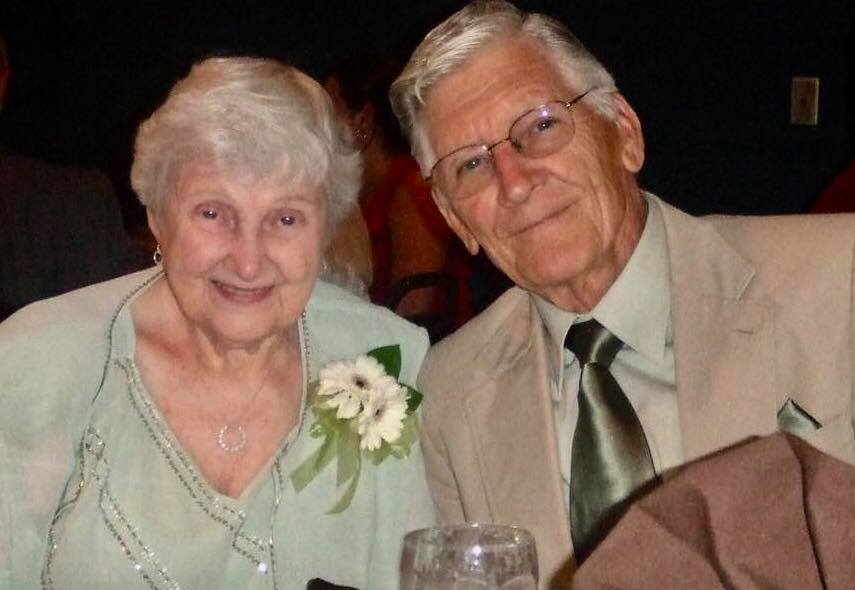
After dinner, we sat around a fire in the yard, my dad playing harmonica, stopping to tell a story and all of us singing along to tunes he picked out.  As the fire died down and we stared into the bottoms of glasses, my dad put a hand on my mom’s knee and started singing softly to her.  She closed her blue eyes, her cheeks blushing and leaned against him as he sang.  When he finished, she said it had been their song back in their dating days in Toronto when they would go down to the bandshell on the waterfront and dance to the Big Band music.  Sometimes being in the forcefield of their love takes your breath out of your chest.

My parents are in their 90’s now. They don’t speak about trips to come as often as they used to, though they still make it out regularly to play music with friends and to visit the grand and great-grand kids.  My mom plays Candy Crush with the best of them and answers the phone on the first ring most of the time, ever hopeful that it is one of her girls.  You feel lifted by the smile that you can hear but can’t see.  My dad uses her as an interpreter, asking questions from across the room, filling in the details of the story she is sharing. Reminding her not to forget to tell you whatever it was she just got finished telling you.  Unless of course, he is in the yard shoveling snow, as he was on the morning of his 90th birthday.  Or he is walking the neighborhood as he has done nearly every day since we lived there, checking in on the neighbors, seeing how the trees are holding up, whose planting what or building what or repairing what.  Bringing the random news of the day home to my mother.  The other day when I called he was in the yard digging up an old Rose of Sharon bush to make room for a new garden bed he was planning for spring.

Decades ago, my sisters and my mom and I took to calling him Superman.  From our countless experiences of him swooping in to save the day, from miraculous feats of strength we had both seen and heard.  He has a way of appearing exactly when and where he needs to be to steady a careening toddler, to keep a door or window from slamming shut, a vase from crashing to the floor from my mother’s hands. To keep a heart from breaking or a tear from falling.  As if he had a sense we all lacked.  And, like Clark Kent, an aw-shucks humility about his magnificent self.

My dad had a mild stroke several years back.  When his doctor told him a very small area of his brain was probably scarred and he may have lost some memory as a result, my dad was quick to tell him not to be worried, that was where he had kept the bad memories, and they only need a very small space because there were few.

My dad’s kryptonite came in the form of hearing aids.  Like his mother before him, his better senses have decided that he has heard so many wonderful things and that today there are many things not worth hearing at all,  and so it’s playing the odds. Hedging its bets that he only needs a fraction of new sounds to minimize the risk of displacing all the wonderful ones.  So he’s selective, choosing the coo of his most recent great-granddaughter over the evening news, focusing on the homily on Sunday and ignoring the days and times of doctor appointments and dental check-ups on Monday.  He has heard the lilting voice of my mother pledging her love for over 70 years and is as happy with the playbacks now as he is reading it on her silent lips.  He pulls his hearing out like a party trick sometimes now, appearing from the back of the house to recite for you exactly what you just said from several rooms away, just in case you were wondering.  Of course, he hoards his hearing for his harmonica, preferring it to the television or conversation.  And for talking to his daughters when they come to gather at the table around a bowl of pistachios to hang on his every word. 

I envy my daddy a bit.  I like quiet contemplation.  I rarely turn the radio on in the car if I am alone.  The thunder of my own thoughts is enough to make me cover my ears most days.  I like to think he is listening to his memories much of the time; the sounds of kids in the pool, dogs in the yard, each of us singing in the church choir, my sister Rose playing guitar, Theresa and Madonna practicing their cheerleading routines, my mom with my Auntie Margaret and Auntie Ruth doubled over in laughter, perhaps his own mother and his brother Jimmy whom he loved fiercely.  When he is pulled out of his reverie by someone asking him a question, my wish is that they have the patience to give him that moment to pack away whatever memory he was playing, for I am certain it is a precious one.  When I speak to him, I don’t waste words and whatever I am saying, all I am thinking as I say it is I love you, I love you, I love you.  And I know he hears me.    
40485045_10216779025298654_4135570781788700672_n

Peg o’ my heart
I’ll love you don’t let us part
I love you I always knew it would be you
Since I heard your lilting laughter
It’s your Irish heart I’m after
Peg o’ my heart
Your glances make my heart say
How’s chances come be my own
Come make your home in my heart